

One Big Beautiful Scam
Inside the GOP Budget That Feeds Billionaires, Starves Kids, and Shreds Democracy.

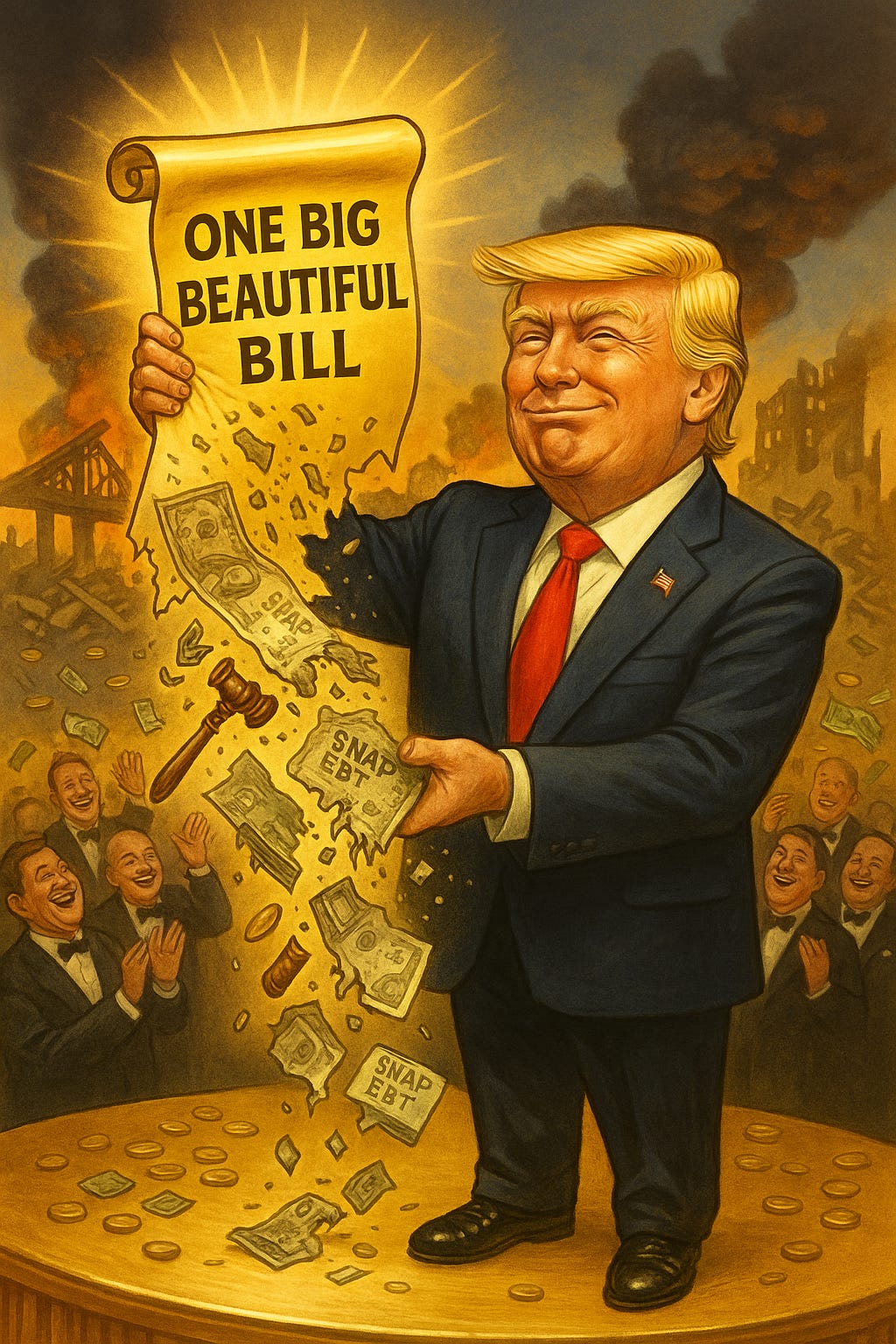
“Tax cuts create jobs.”
That’s been the Republican Party’s rallying cry for over forty years. It is a seductive promise, packaged in the language of growth and prosperity. If we just let the rich keep more of their money, they’ll turn around and reinvest it into America, they say. Factories will rise, wages will soar, and the federal deficit will take care of itself as the economy magically lifts all boats. It’s hard to even type the above without laughing so hard, my spell check is on overdrive from all the typos.
In the 1980s and early 2000s, the Republican Party at least had the political decorum to dress up their tax cut schemes in economic theory. They claimed these cuts would trickle down, spur investment, and lift all boats. It was dishonest, but it was still an argument.
Today, they don't even bother with the pretense.
With a sprawling, insular media ecosystem that feeds its base a constant diet of confirmation bias, the party no longer needs to lie. It simply asserts, and the assertion becomes truth. Supply-side dogma is no longer debated, it's become canon.
So buckle up. What’s coming next isn’t surprising. It’s arithmetic: ballooning deficits, stagnant wages, inflated prices, corporate windfalls, and a working class once again told that prosperity is coming... just not yet.
But hey, this is what rural America voted for—again. Right?
I’m Tired of this Myth
I’ve spent my entire life watching Republicans lie to the American people about tax policy and the real intent behind their budgets. And frankly, I’m done with it.
This is one area of policy where the truth isn’t hard to find—if you’re even slightly open to it. The rhetoric may be slick, but budget bills are concrete. They cut through the campaign noise, the talk radio spin, and the cable news contortions. They show you, line by line, what a party truly values.
That’s why I’ve poured a lot of what I’ve learned about Republican economic policy over the last 40 years into this article, because maybe, just maybe, a reasonable conservative will come across this and see what’s really going on. Because they’re not hearing it in their media echo chamber, and I know this isn’t what any reasonable person would ever vote for, if they fully understood the negative impact.
The Supply-Side Mirage
Supply-side economics (aka trickle-down economics), famously championed by Ronald Reagan, rests on the idea that cutting taxes, especially on the wealthy and corporations, unleashes investment and job creation. But history tells a much grimmer story.
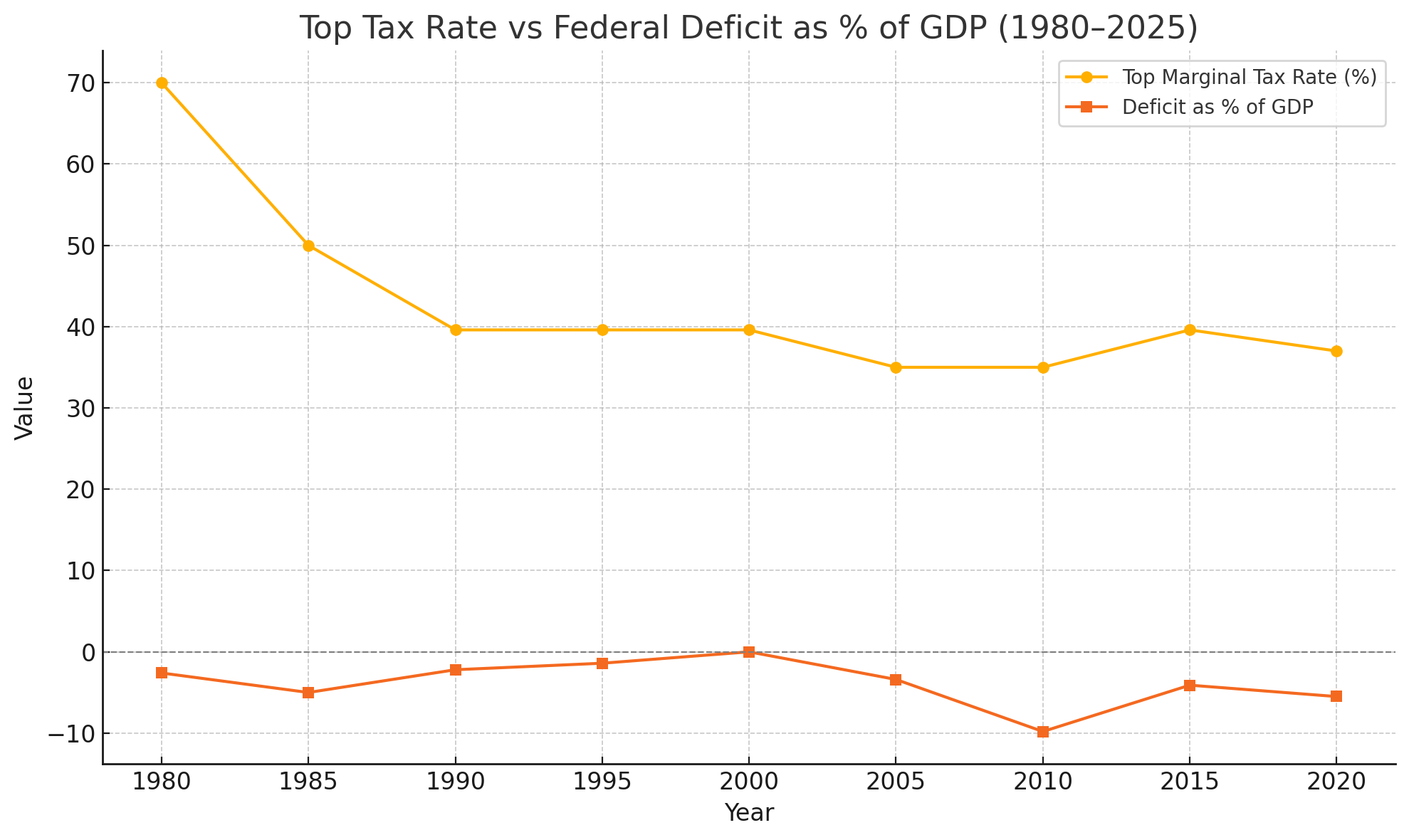
Historical Outcomes of Supply-Side Policies:
Reagan (1981): Massive tax cuts led to soaring deficits. The national debt tripled, and by the end of his presidency, he had to sign multiple tax increases just to contain the bleeding.
George W. Bush (2001 & 2003): Enacted tax cuts in a time of surplus; deficits returned, and the 2008 financial crisis exploded under these policies.
Trump (2017): Corporate tax rate slashed to 21%. $6.4 trillion in stock buybacks from 2018 to 2022. Median worker wage growth was negligible.
The GOP’s New Gift to the Rich: "One Big Beautiful Bill"
The latest Republican House budget, euphemistically titled the "One Big Beautiful Bill," is a masterclass in trickle-down deception. Despite record deficits and a public increasingly concerned with affordability, the bill doubles down on tax cuts for the rich while gutting social safety nets.
I actually tried to read through a majority of this 1.1k+ page bill. It’s a monstrosity to say the least. If you’re bored and want to waste some time reading it, just remember: it pairs best with a glass of whiskey and the sound of a bald eagle weeping softly in the distance (a link to the budget bill). So here’s my attempt at summarizing all the key points into one digestable bullet point list:
Massive Tax Cuts for the Wealthy:
The bill locks in and expands Trump-era tax cuts, making them permanent.
Households earning over $200,000 would receive an average tax cut of $13,200.
By contrast, those earning under $10,000 would see an average loss of $2,700, due to reduced refundable credits.
Corporate Tax Giveaways:
The bill renews full expensing for business investment, a costly provision with limited proven benefit.
Extends international tax loopholes that allow profits to be shifted offshore, reducing U.S. tax liability.
Estimated corporate tax revenue loss: over $1.1 trillion over the next decade.
Healthcare Cuts That Hit the Poor Hardest:
$800 billion in cuts to Medicaid, including caps on federal funding and new work requirements.
States would be forced to reduce eligibility or cut benefits, risking coverage for up to 15 million low-income Americans.
Slashing Food Aid at a Time of Rising Hunger:
The bill proposes $267 billion in cuts to SNAP (food stamps).
Introduces new work requirements for older recipients (50+), despite studies showing these rules increase food insecurity without boosting employment.
Education and Workforce Cuts:
Reductions in federal student aid programs and workforce training grants.
Slashes Title I funding for low-income school districts, widening educational inequality.
Cuts to Infrastructure and Public Investment:
Major rollbacks in transportation, broadband expansion, and clean energy incentives.
Undermines local economic development and job creation initiatives.
Wage Suppression by Design:
Federal Minimum Wage Freeze: No increase or cost-of-living adjustments to the federal minimum wage, keeping it at $7.25/hour (unchanged since 2009).
Ban on Local Wage Hikes: Provisions to block cities and states from enacting higher minimum wages or expanded labor protections using federal funds.
Chilling Civil Society and Dissent:
New Surveillance Grants: Expands grants to state and local law enforcement for domestic surveillance technology, with minimal oversight.
Suppression of Protest Rights: Adds language that could classify protest disruptions as federal crimes if they occur near “critical infrastructure,” such as pipelines or government offices.
Undermining the Courts and Judicial Oversight:
Restriction on Enforcement of Court Orders: Section 70302 prohibits federal courts from using appropriated funds to enforce contempt citations against government officials unless plaintiffs post a bond—effectively making it harder to hold officials accountable.
Retroactive Application: This bond requirement applies retroactively, threatening to invalidate past court rulings against the government, including those related to immigration and civil rights.
Limitation on Judicial Oversight: Financial hurdles imposed on plaintiffs could chill legal action, weakening the judiciary’s ability to serve as a check on executive power.
Erosion of Checks and Balances: Legal experts warn this sets a dangerous precedent, shifting power away from the courts and removing key barriers to executive overreach.
Attacks on IRS Enforcement & Revenue Collection:
Defunding the IRS: The bill rolls back much of the increased funding allocated to the IRS under the Inflation Reduction Act. This guts its ability to audit wealthy tax dodgers and enforce compliance among corporations. Reduces federal revenue collection by an estimated $120 billion over the next decade, money that would have come largely from high-income individuals and big businesses evading taxes. Makes deficits worse, not better, while shielding the ultra-wealthy from scrutiny.
Key Deregulatory Measures in the Bill:
Financial Deregulation: Loosens oversight of regional banks by raising the threshold for enhanced supervision, echoing rollbacks that contributed to the collapse of Silicon Valley Bank.
Environmental Rollbacks: Cuts EPA funding and weakens enforcement of the Clean Air Act and Clean Water Act, allowing more pollution near vulnerable communities.
Worker Protections Gutted: Nullifies new OSHA regulations on heat exposure and workplace safety, disproportionately affecting construction and agricultural workers.
Consumer Protections Curtailed: Slashes funding for the Consumer Financial Protection Bureau (CFPB), limiting its ability to police predatory lending, payday loan abuses, and credit reporting fraud.
Education Oversight Undermined: Removes federal standards for for-profit colleges, inviting the return of exploitative institutions that saddle students with debt and deliver little economic value.
Broadband & Tech Regulation Freeze: Blocks the FCC from enforcing net neutrality or expanding rural broadband programs, favoring incumbent telecom monopolies.
Culture War Giveaways & Ideological Earmarks:
Tax Breaks for Gun Silencers: Yes, really. The bill includes a provision that makes gun silencers tax-exempt, removing the $200 federal tax stamp imposed under the National Firearms Act.
Anti-DEI Provisions: Defunds any federal agency initiatives related to Diversity, Equity, and Inclusion (DEI). Bans the use of federal education grants on curriculum that includes systemic racism, gender theory, or LGBTQ+ topics—even in higher education. Slaps a gag order on school districts using federal dollars from “promoting divisive concepts.”
Obscure Morality Policing: Adds a clause that prevents federal research grants from going to universities that support gender-affirming care, abortion services, or “pornographic content”—a term undefined and left intentionally vague. May defund entire medical schools or psychology departments based on ideological grounds.
Agribusiness Sweeteners: Includes subsidies for cattle ranchers and hog producers that meet certain “patriotic food production” criteria—loosely defined to favor large donors from the Midwest. Removes EPA oversight on methane emissions from farms classified as “family-owned,” even if they operate at industrial scale.
Symbolic Pandering: Allocates $10 million for a National Patriotism Curriculum, requiring the Department of Education to develop materials “highlighting the moral excellence of American capitalism.” Promotes voluntary “Americanism pledges” in federally funded afterschool programs and public housing.
Macroeconomic Impact:
According to the CBO, the bill would add $3.8 trillion to the national debt over ten years.
Because the tax cuts mostly benefit high earners with low spending rates, the economic stimulus effect is muted.
Cuts to programs with high fiscal multipliers (like Medicaid and SNAP) reduce GDP and increase poverty.
Quote from Center on Budget and Policy Priorities:
“The House budget proposal effectively robs the working class to reward high-income households who need no additional help."
Quote from former Treasury economist Kimberly Clausing:
“The bill is the fiscal equivalent of giving champagne to billionaires while snatching bread from the hungry.”
Does Any of This Actually Help the Economy?
Short answer: No.
Long answer: All available data shows that tax cuts for the wealthy do not meaningfully stimulate job growth. The wealthy don’t spend their tax windfalls; they invest them in stocks, real estate, and offshore accounts. Meanwhile, when the working and middle class get a boost—through things like the Earned Income Tax Credit or direct stimulus checks—they spend it. That spending drives demand, and demand drives job creation.
Key Study: A 2012 Congressional Research Service report found no correlation between top tax rate cuts and economic growth, but strong correlation with rising income inequality.
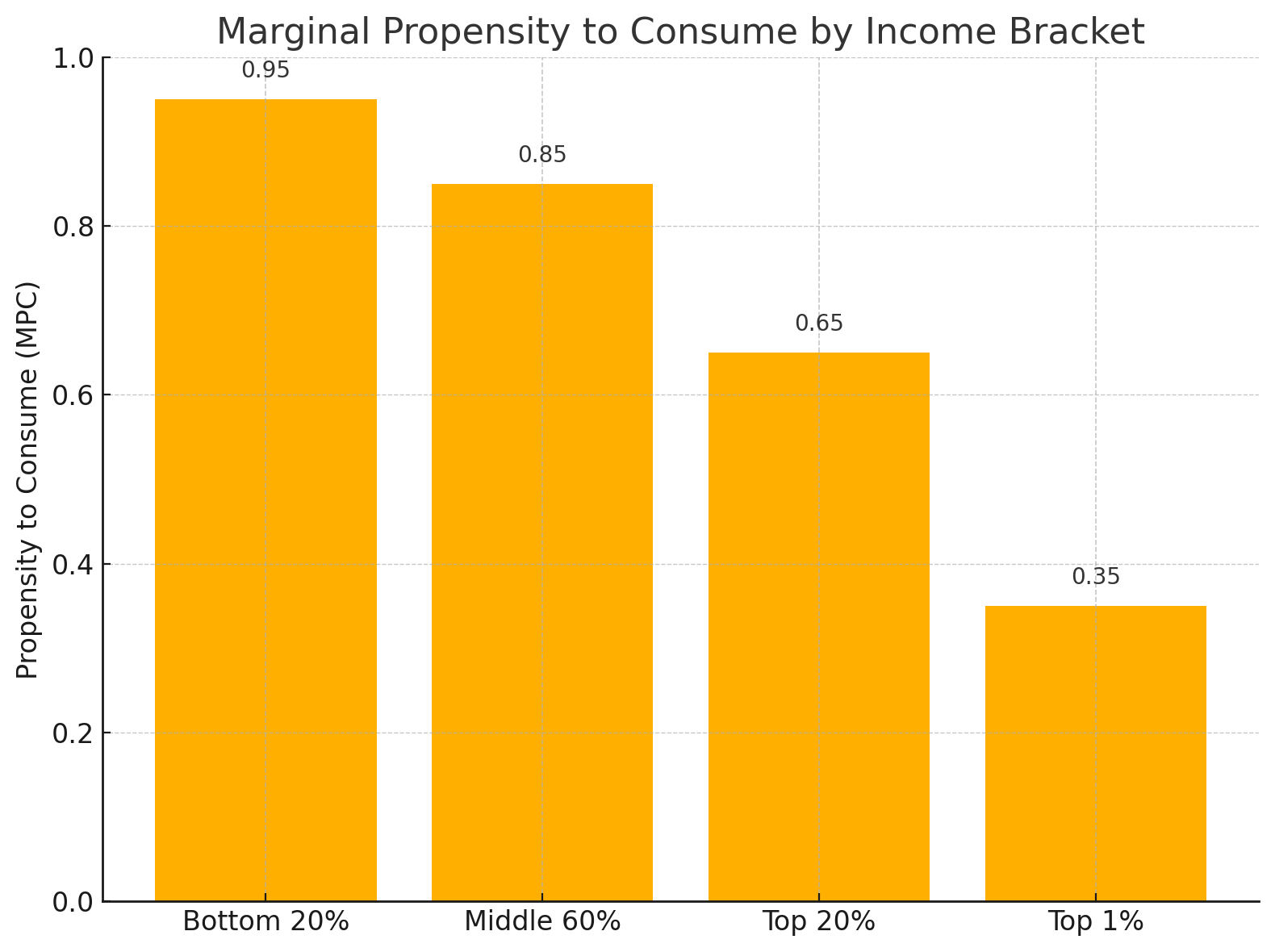
📈 IMF & OECD Findings: Countries with lower income inequality tend to grow faster and more sustainably. Fiscal redistribution does not harm growth when well-targeted.
Economists across the spectrum, from the IMF to the Congressional Budget Office, agree: broad-based investments in infrastructure, education, healthcare, and poverty reduction create more growth than tax cuts for the rich.
The Big Lie
As I’ve said, the Republicans have lied to the American public for decades about the economic benefits of tax cuts. They’ve sold austerity for the poor as fiscal responsibility while passing massive giveaways to the rich under the guise of growth. The working class was told to wait while billionaires got richer.
But the receipts are in:
The 2017 tax cuts added nearly $2 trillion to the debt.
Wage growth remained flat for most Americans.
Corporate profits and CEO pay reached historic highs.
And now, in 2025, Republicans are proposing another round of cuts, funded by slashing healthcare and food aid for the poor.
This isn’t about jobs. It never was. It’s about wealth preservation and power.
A Better Path Forward
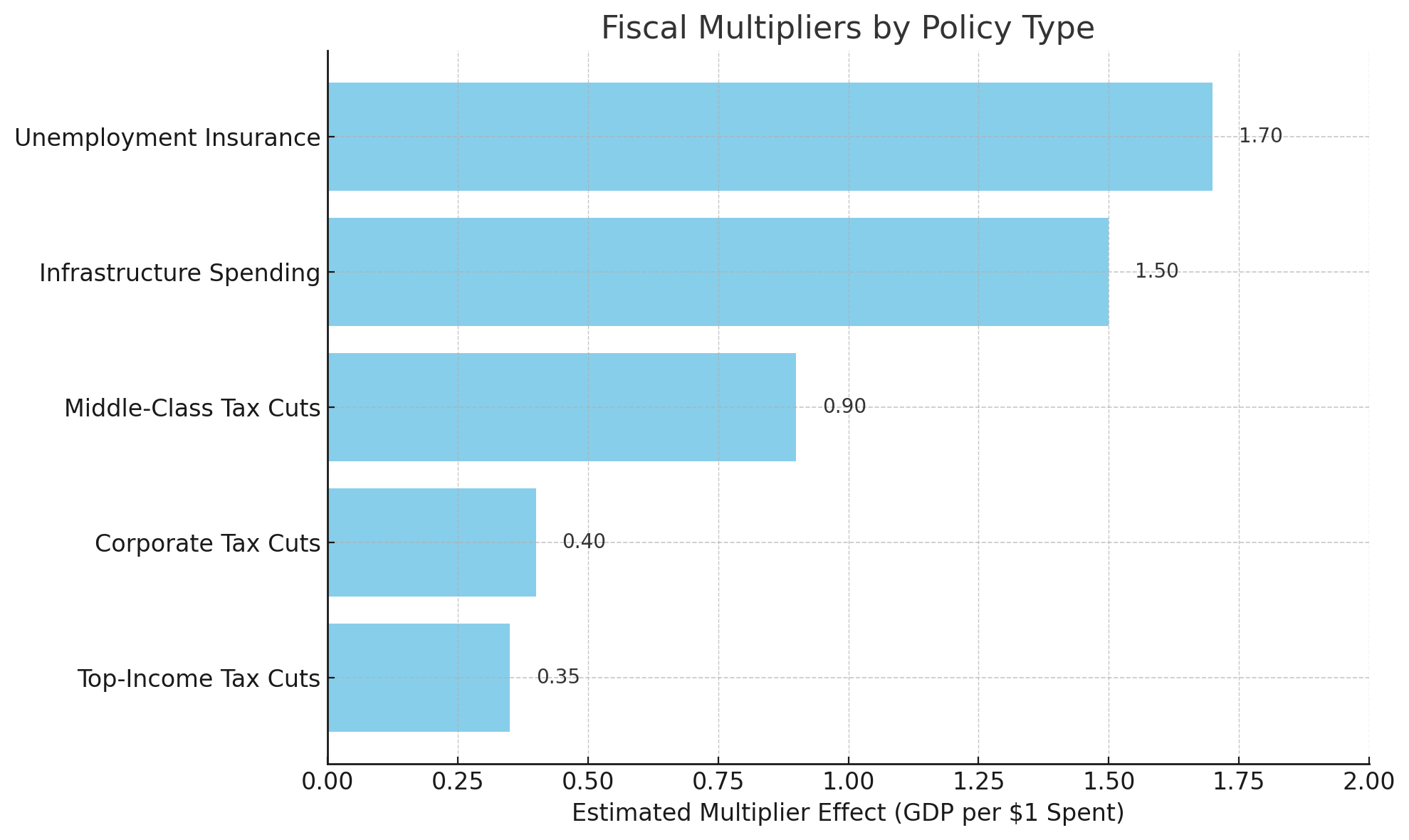
If we want sustainable growth, we need to:
Raise taxes on the wealthiest Americans and multinational corporations.
Expand tax relief for the working and middle class.
Invest in healthcare, childcare, clean energy, and public infrastructure.
Rein in tax loopholes and offshore shelters.
The myth that tax cuts for the rich are the key to prosperity is a con, one that’s cost us trillions and left millions behind. It’s time to stop pretending otherwise.
Some will say, “Well, it still has to pass the Senate. There might be some pushback.” Yeah, ok.
But to those people, I’d suggest they haven’t been paying attention. If even one Republican senator dares to waver, Trump will be speed-dialing him within minutes, berating, threatening, and reminding him who controls the base. Will there be tweaks? Probably some. But is there a single GOP senator with the spine to publicly defy Trump’s “Big Beautiful BS”?
I wouldn’t bet on it.
Sources
https://www.washingtonpost.com/opinions/2025/05/23/trump-budget-wealthy-poor-populism/
https://www.theguardian.com/us-news/2025/may/23/trump-republican-bill-food-health-cuts
https://time.com/7287955/big-business-trumps-tax-cuts-essay/
https://budget.house.gov/imo/media/doc/one_big_beautiful_bill_act_-_full_bill_text.pdf